


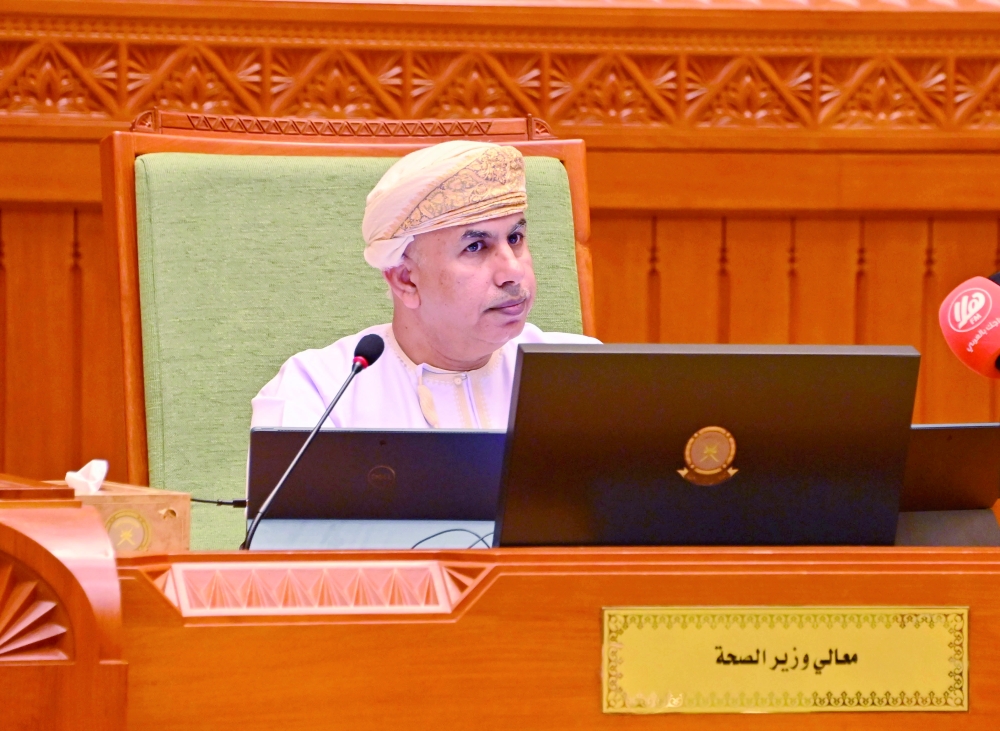





MUSCAT: The Majlis Ash'shura on Sunday hosted Dr Hilal bin Ali al Sabti, Minister of Health, to review the ministry’s performance, policy direction and executive programmes, offering a comprehensive assessment of Oman’s evolving healthcare sector.
The minister’s statement covered six key pillars: institutional performance, development projects, quality of health services, crisis management, health transformation and financial sustainability, outlining both achievements and future priorities.
Dr Al Sabti said the ministry has completed several strategic initiatives under the 10th Five-Year Development Plan, including the adoption of the National Health Policy, the National Policy for Health Information Governance and Management, and the launch of the Oman Healthcare Accreditation System.
He noted that additional milestones include a health system performance assessment conducted in cooperation with the World Health Organization (WHO), the National Health Survey for Non-Communicable Diseases, and the implementation of pre-marital medical examinations from January 1, 2026, under Royal Decree No 111/2025, aimed at enhancing family health and reducing hereditary risks.
Under the Universal Health Coverage Programme — a key pillar of Oman Vision 2040 — the ministry has expanded healthcare access by opening new hospitals in Al Mazyouna, Al Suwaiq, Khasab and Wadi Bani Khalid, bringing the total number of ministry-run hospitals to 56.
New facilities also include the Central Public Health Laboratory and specialised centres such as the Fertility Centre at Khoula Hospital, recovery centres in Muscat and Sohar, and the National Centre for Virtual Health.
Further expansion has seen the opening of health complexes in Al Maabela and Al Amerat, the upgrade of Liwa Health Centre, and the launch of multiple new health centres across Oman.
Major hospitals in Suhar, Nizwa and Sur have been upgraded to tertiary care level, alongside expansions at the National Heart Centre at the Royal Hospital.
As part of decentralisation efforts, between 20 and 30 specialised services have been introduced at secondary referral hospitals across governorates, significantly enhancing regional access to care. Capacity has also been increased at numerous health centres nationwide.
The ministry has upgraded several hospitals and health centres, including those in Thamrait, Qurayat, Sinaw, Al Duqm and Adam, while establishing nine new dialysis units across various wilayats. Emergency care has also been strengthened with new and expanded units in multiple locations.
Looking ahead, Dr Al Sabti outlined priorities including sustaining universal health coverage, improving secondary and tertiary services, strengthening the national healthcare workforce, and advancing infrastructure and digital transformation through technologies such as artificial intelligence.
He also emphasised the importance of empowering the private health sector through localisation, pharmaceutical security, local manufacturing and investment, alongside stronger coordination with public and private partners and international organisations.
Plans under the 11th Five-Year Development Plan (2026–2030) include major projects such as the National Centre for Women and Child Health, the National Centre for Ophthalmology, the National Centre for Rehabilitation, and the development of an Omani genome database, in addition to new hospitals and expanded recovery and rehabilitation facilities.
Health indicators continue to show improvement. The under-five mortality rate declined to 9.9 per 1,000 live births in 2024, while infant mortality fell to 8 per 1,000. Maternal mortality also dropped significantly to around 11.5 per 100,000 live births in 2025, reflecting enhanced maternal care and medical services.
Service efficiency has improved, with reductions in waiting times for outpatient appointments and specialised procedures. The proportion of patients waiting more than four weeks for appointments has declined significantly, while 83 per cent of non-emergency surgeries are now conducted within 18 weeks.
Among notable medical achievements, the minister highlighted Oman’s first heart transplant from a brain-dead donor and the successful implantation of a HeartMate 3 artificial heart.
The ministry has also received several international accolades, including recognition from global health bodies, and its Central Public Health Laboratories have been designated as a WHO Collaborating Centre — the first in the Eastern Mediterranean region. Oman has also been certified for eliminating mother-to-child transmission of HIV and syphilis.
Dr Al Sabti underscored the critical role of human resources, noting that the ministry’s workforce has grown to over 44,000 employees, with Omanisation reaching 71 per cent. Near-full localisation has been achieved in several fields, including pharmacy and administrative roles.
Efforts are ongoing to align education outcomes with labour market needs, while expanding training and employment opportunities for graduates in the health sector.
The minister also highlighted advancements in pharmaceutical supply chains, including increased strategic reserves, improved storage systems and new regional warehouses to ensure resilience during emergencies.
The private health sector continues to play a vital role, comprising dozens of hospitals and thousands of facilities that serve millions of patients annually and contribute to service innovation and expertise exchange.
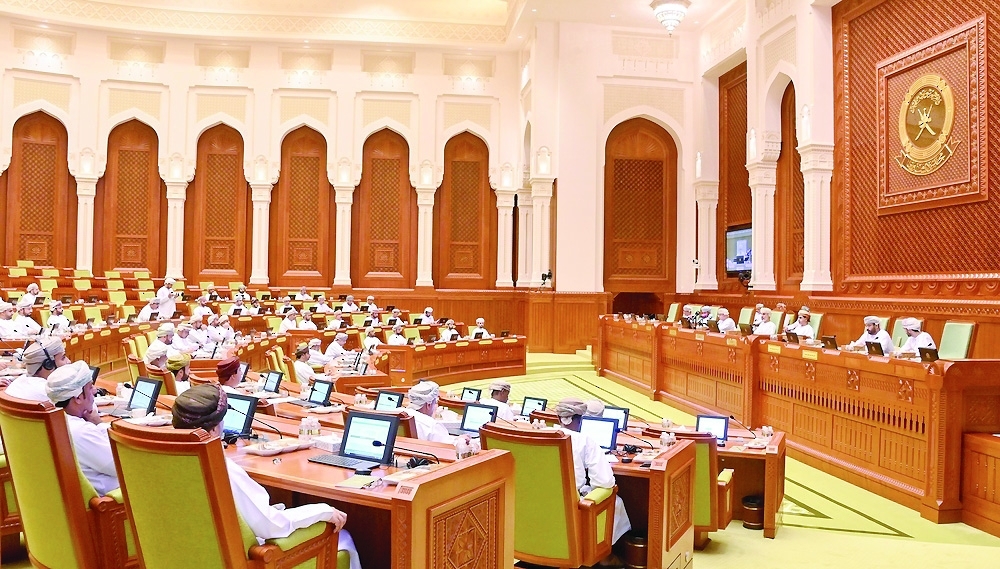
The session was chaired by Khalid bin Hilal al Maawali, Chairman of Majlis Ash’shura, in the presence of Shaikh Ahmed bin Mohammed al Nadabi, Secretary-General of Majlis Ash’shura and the Council members. — ONA
Oman Observer is now on the WhatsApp channel. Click here


